
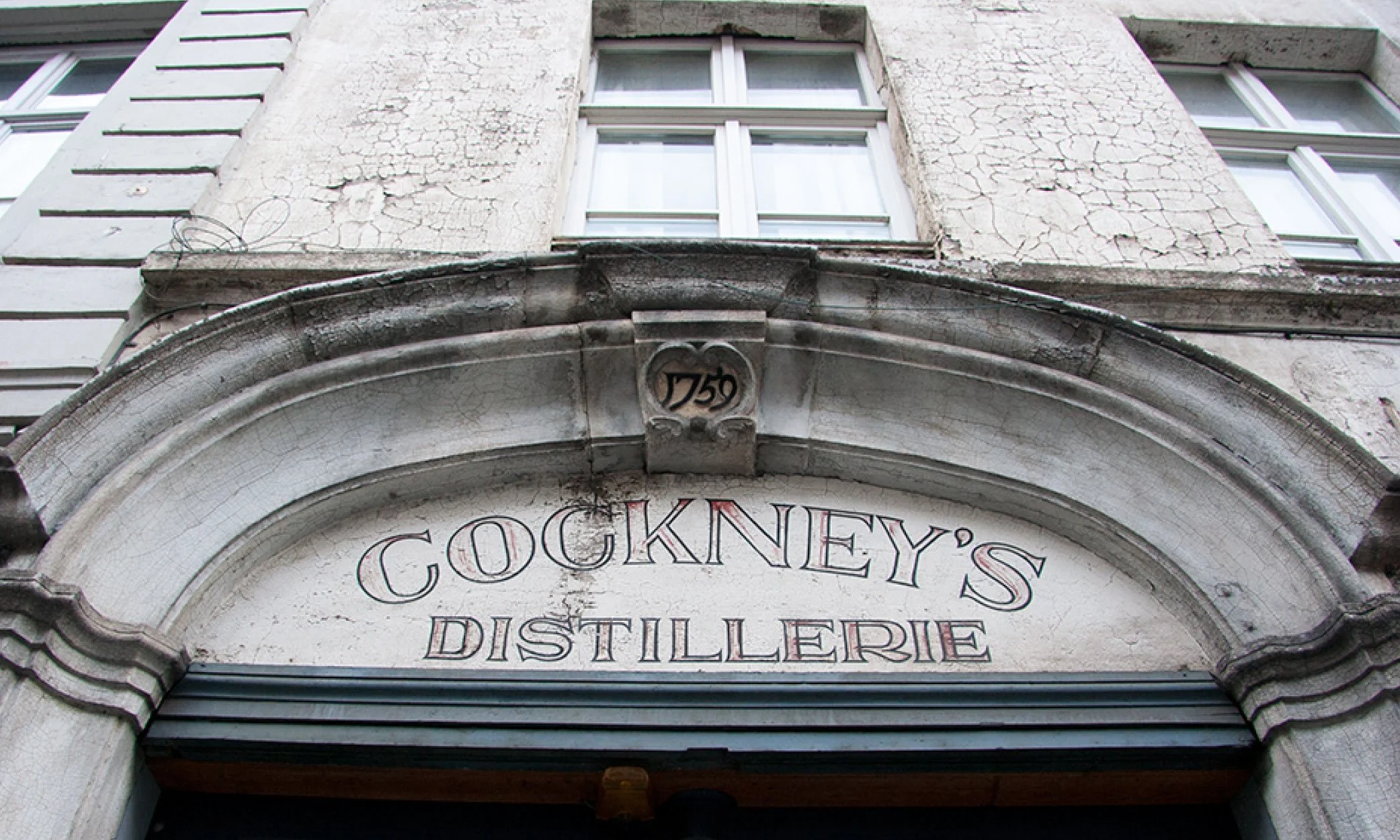
A couple of weeks ago, during the annual flea market on Lange Violettestraat, I found myself doing what I probably do too often: looking up.
While most people were browsing records, ceramics and old books, my attention drifted towards the façades. That's when I noticed it. Barely visible beneath layers of age and weather, a painted sign slowly emerged from the brickwork.
The letters have almost disappeared. Time has softened their edges, faded their contrast and erased much of their confidence. But they're still there. Just enough to catch your eye if you're paying attention. Ghost signs have a way of doing that. They interrupt the present for a brief moment, reminding us that buildings often have much longer stories than the businesses that occupy them today.
This one belongs to Cockney's Distillery, a name with deep roots in Ghent's industrial history.
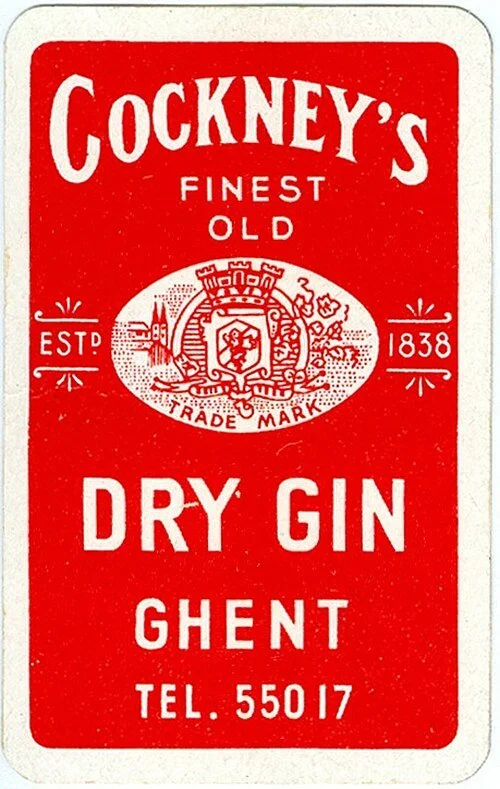
'Cockney's Dry Gin' playing card for Cockney's Distillery in Ghent
Date: 2015 & 2026
Info: The distillery was founded in 1838 by an English distiller who had settled in the city. He named his business Cockney's, referring to the traditional name for someone born within earshot of the bells of St Mary-le-Bow Church in East London. It feels like a small piece of home, painted onto a façade hundreds of kilometres away.
Over the decades the distillery changed hands several times, first to Jules De Brabandere and later to the Hoste family, who would run the business for three generations. As production methods evolved, distilling gradually gave way to blending, and the company eventually moved away from Lange Violettestraat. In 2003, after approximately 165 years, the Ghent distillery closed its doors. The Cockney's brand and its recipes were acquired by the Van der Schueren distillery in Aalst, where the gin continues to be produced today.
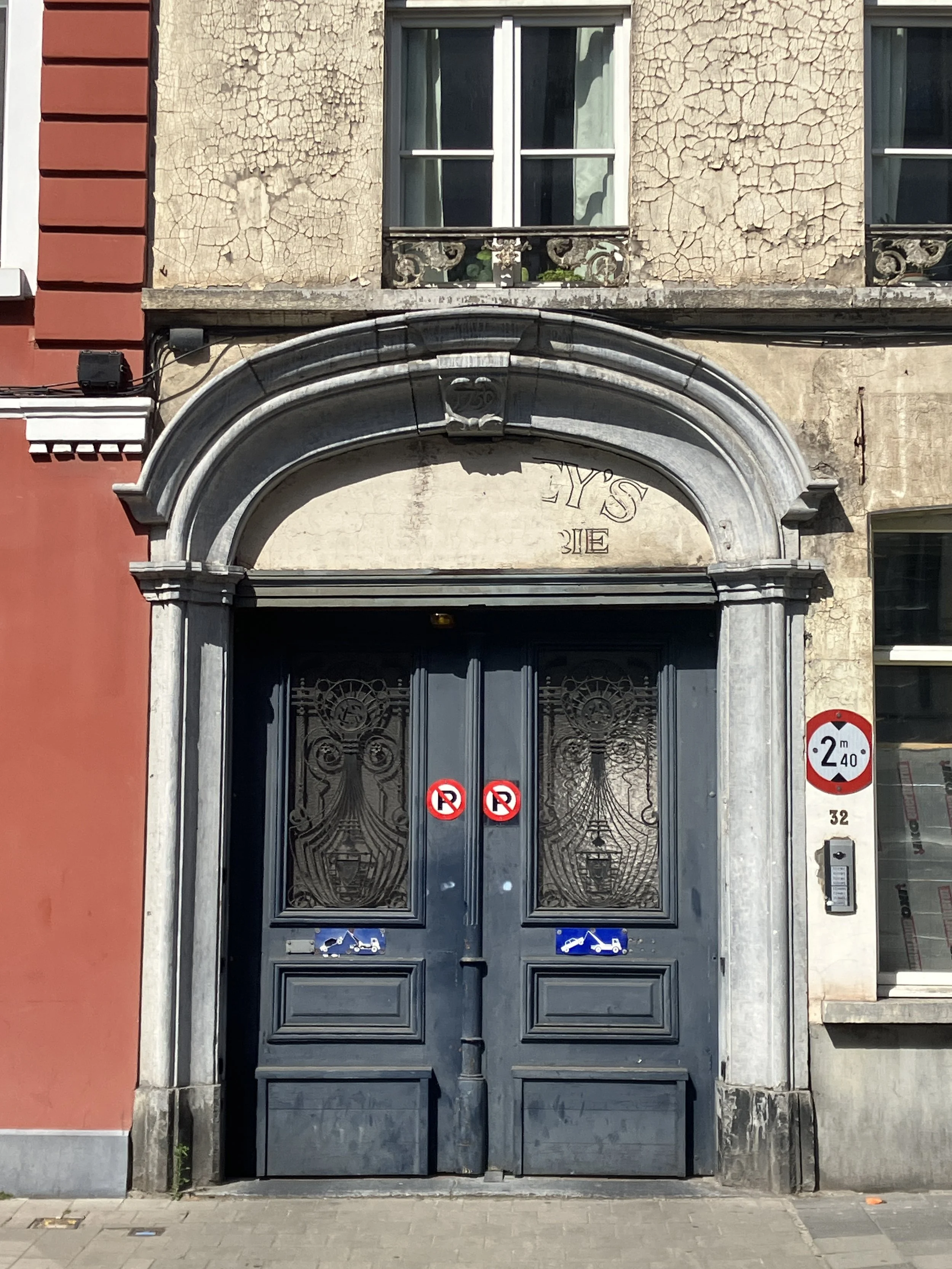
2026

Yet standing in front of the old building, none of that history is immediately obvious.
What remains is paint. Faded lettering. Hand-painted capitals that once served a purely practical purpose: telling passers-by what happened behind these walls.
It's remarkable how often these details survive. Long after the machinery has been removed, the owners have changed and the business has disappeared, the letters remain. Not because anyone intended to preserve them, but because they simply outlasted everything around them.
Walking through a city like Ghent, it's worth looking up every now and then. Above the shopfronts and market stalls, fragments of the past are still hiding in plain sight.
to be continued…
you might also like
Type walk in Ghent. Before & after. 90 years of Dossche Sport.
Type walk in Ghent. Before & after. Marchandises & stories.
Type walk in Ghent. Before & after. Only “Beerhouse” remains.
Type walk in Ghent. Before & after or from lace to lunch: the changing story of Kraanlei 33.
Sunday type walk in Pressing Matters magazine
Sunday type walks in Bookish Talks by iBookBinding
Follow my Sunday type walks on Instagram